
the scroll
Featuring global insights on children’s app and AI usage, the day-to-day challenges of digital parenting, and strategies for parents to help reduce the pressures, Qustodio’s 7th annual report explores children’s online experiences and digital safety in 2025.
QUSTODIO ANNUAL REPORT 2025
Lost in
the scroll
Parenting algorithms, apps, and AI in an online age
Key findings from the report

12 years
The most common age parents gave their child their first smartphone, with 1 in 4 parents (25%) choosing this age.

x3
The increase of children using the ChatGPT app around the world, with use tripling from 9% of kids to 30% globally.

16 years
The age most parents in the US, Brazil, the UK, Spain, and Australia felt was most appropriate for children to start using social media.

2.2 hours
The average daily time kids around the world spent on TikTok. The app’s heaviest users for 2025 were in the US, rising to an average of 2.5 hours.

-14%
The dip in time kids spent on communication apps such as Snapchat, WhatsApp, and Discord globally, versus a +16% increase in time spent on social media apps.

+1 hour
How much more time each day kids globally spent playing Roblox on desktop compared with mobile.
Featuring global insights on children’s app and AI usage, the day-to-day challenges of digital parenting, and strategies for parents to help reduce the pressures, Qustodio’s 7th annual report explores children’s online experiences and digital safety in 2025.
*Report available in English
Key findings from the report
12 years
The most common age parents gave their child their first smartphone, followed by 21% of 11-year-olds.
x3
The increase of children using the ChatGPT app around the world, with use tripling from 9% of kids to 30% globally.
16 years
The age most parents in the US, Brazil, the UK, Spain, and Australia felt was most appropriate for children to start using social media.
2.2 hours
The average daily time kids around the world spent on TikTok. The app’s heaviest users for 2025 were in the US, rising to an average of 2.5 hours.
-16%
The dip in time kids spent on communication apps such as Snapchat, WhatsApp, and Discord globally, versus a +16% increase in time spent on social media apps.
+1 hour
How much more time each day kids globally spent playing Roblox on desktop compared with mobile.
*Download available in English only
Looking back together
How did children, their parents, and guardians experience the digital world in 2025? Explore the results for each chapter of our research below.
Looking back together
How did children, their parents, and guardians experience the digital world in 2025? Explore the results for each chapter of our research below.
AI

Online video

Social media
Gaming

Education

Communication
Digital parenting
Featuring guidance
from expert contributors
Lost in the scroll was shaped in collaboration with leading experts who work every day to improve children’s online safety and wellbeing. Drawing on their insight and experience, the report features practical guides for parents on digital safety – from navigating AI companions to helping teens build healthier social media habits.

Teodora Pavkovic
Director of Wellbeing and Parent Advocacy, Qustodio
Read: AI companions and your child

Yasmin London
Qoria Global Online
Safety Expert
Read: Understanding in-game chat and its risks

Dr. Nicole Beurkens
Child
psychologist
Read: Getting your child their first phone

Gloria R. Ben
Psychologist &
neuropsychologist
As director of Desarrollarte, a psychology and educational development center, Gloria leads comprehensive interventions for children and teens, and is a specialist in neuropsychological evaluation for specific educational support needs.
Read: Navigating disappearing messages
from expert contributors
Lost in the scroll was shaped in collaboration with leading experts who work every day to improve children’s online safety and wellbeing. Drawing on their insight and experience, the report features practical guides for parents on digital safety – from navigating AI companions to helping teens build healthier social media habits.
Teodora Pavkovic
Director of Wellbeing and Parent Advocacy, Qustodio
Read: AI companions and your child
Yasmin London
Qoria Global Online
Safety Expert
Read: Understanding in-game chat and its risks
Dr. Nicole Beurkens
Child psychologist
Read: Getting your child their first phone
Gloria R. Ben
Psychologist & neuropsychologist
Read: Navigating disappearing messages


About Qustodio’s research
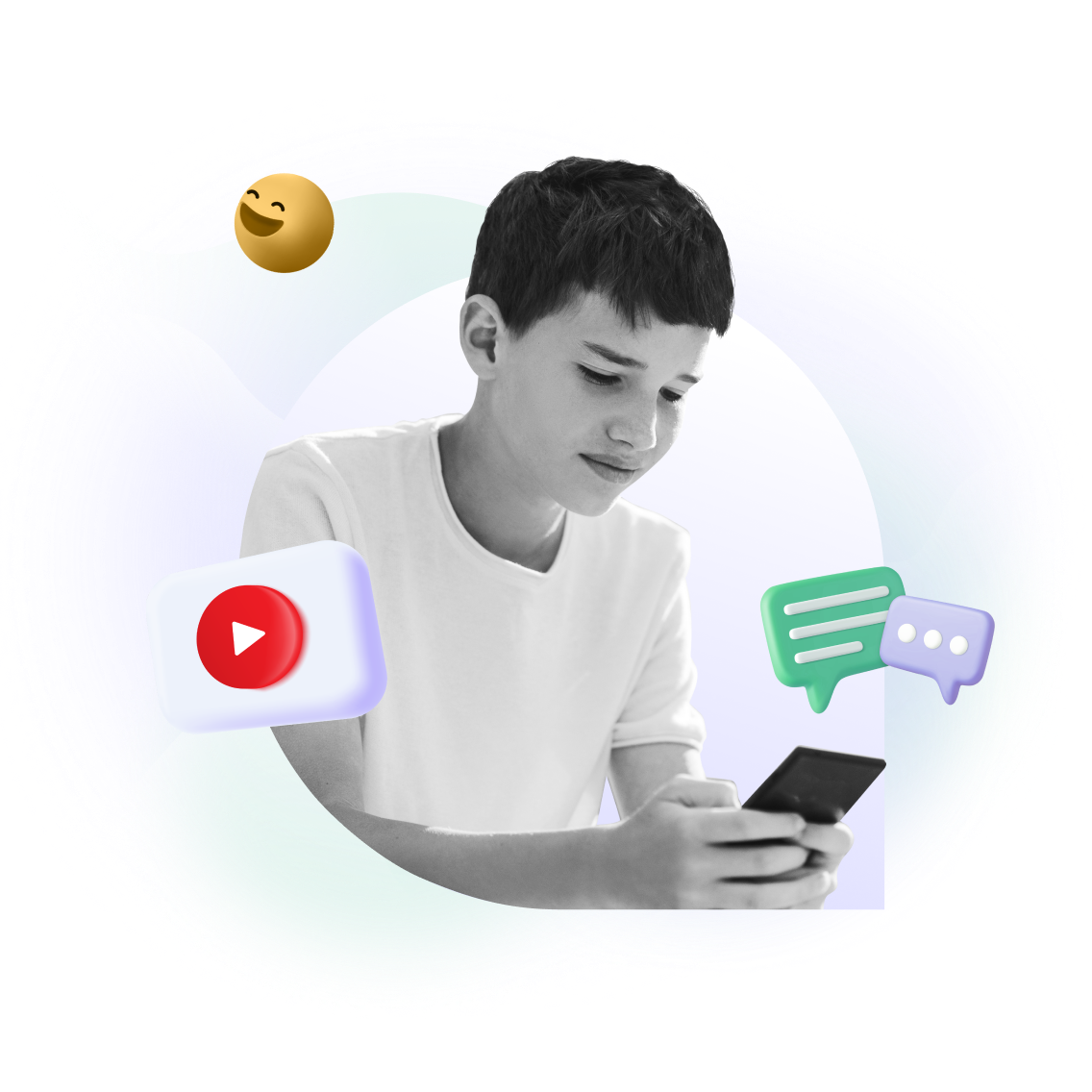
Since 2019 we have examined and explored how young people use technology, reporting on the apps children turn to for learning, play, and connection.
Visit our full research library to dive deeper into the trends and insights shaping children’s digital lives.
About Qustodio’s research
Since 2019 we have examined and explored how young people use technology, reporting on the apps children turn to for learning, play, and connection.
Visit our full research library to dive deeper into the trends and insights shaping children’s digital lives.