


New findings highlight the growing need for parental support as children in the UK spend more time navigating social feeds, short-form video, and emerging AI tools.
Today, Qustodio released its 2025 Annual Data Report, Lost in the scroll: parenting the algorithms, apps, and AI shaping childhood. Drawing on UK data alongside global insights, the report explores how children are engaging with technology and how parents are responding as digital experiences become increasingly personalised, immersive, and algorithm-driven.
Published to mark Safer Internet Day, Qustodio’s annual report, now in its seventh year, analyses real-world patterns in children’s digital use at a time of heightened public debate and regulatory attention around social media, gaming, and AI-powered tools. For UK parents navigating mixed messages, from calls for bans to the touting of “digital detoxes”, to the rapid expansion of AI in everyday life, Lost in the scroll examines where children are spending their time online and how families are adapting to an ever-changing digital landscape.
“Technology is no longer passive – it talks back, leads discourse, entertains, educates, and yes, even sometimes misleads,” said Teodora Pavkovic, Director of Wellbeing and Parent Advocacy, Qustodio. “These findings indicate that parents are being asked to manage more than just “screen time”, and are parenting feeds, algorithms, and AI tools while surrounded by growing concern and scrutiny. Families are looking for clear, practical guidance that help them stay present and support their children’s healthy development in a more connected world.”
Algorithm-driven platforms dominate kids’ online lives, even as parents strive for limits
The comprehensive study is based on anonymised app data from over 400,000 families worldwide with children aged 4-18, while comparing country level-insights in the UK, US, Australia, Brazil, France, and Spain. To better understand how families are using digital wellbeing tools and parental controls, Qustodio surveyed 1,361 parents using these tools across the six countries, to confirm where their concerns lie, and how families are responding in the face of proposed restrictions, guidelines and changes for kids online.
Rachel Huggins, CEO at Internet Matters, said “Lost in the scroll reveals many interesting findings about how families are navigating the digital world, adding new angles to the picture we see through our own research. The digital world offers many positive benefits, but it has never been tougher for parents to keep on top of their children’s online lives and to help protect them from harm. Constantly evolving tech, including new AI tools, makes it hard for parents to keep up, and 6 in 10 parents tell us that they are overwhelmed when it comes to keeping their child safe online (Internet Matters Pulse June 2025)”.
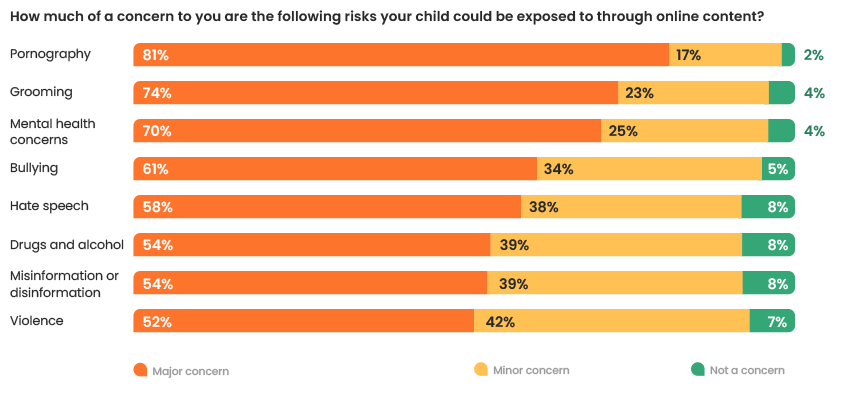
In 2025, children’s digital experiences are shaped less than they once were by the open internet, but more by tailored, unique feeds and algorithm-driven platforms that determine what they watch, see, and play next. Apps such as TikTok, Instagram, and Roblox are a core part of children’s online worlds, despite being seen as riskier platforms by parents: Over three quarters of parents classify content on TikTok as high risk (77%), half believe the same for instagram (50%), and one third (33%) assert that content on Roblox poses an elevated risk.
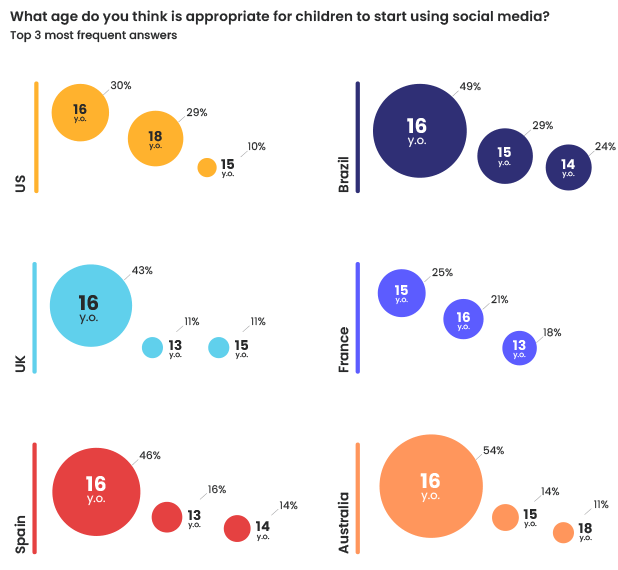
In the UK many parents consulted expressed their support for 16 being the appropriate minimum age for social media. As one parent shared:
“Australia have adopted 16 as the legal age and upon much reflection this feels like an age where their maturity might help them to navigate the dangers of social media. I am conscious social media may be inevitable long term but the later the better in my view. At 16, they hopefully have developed sufficient self-awareness and the ability to ask help when needed.”
Despite concern, algorithm-led platforms still account for a significant share of children’s time and attention online well before that age. Across all children included in the Qustodio study, they spent more time on social media than ever in 2025, averaging over an hour a day in the UK (67 minutes), up from 58 minutes a day in 2024. For those accessing platforms such as TikTok, the daily time spent climbed yet higher: British children using TikTok averaged 2h 23 minutes a day on the app.
AI use among kids surged over the year
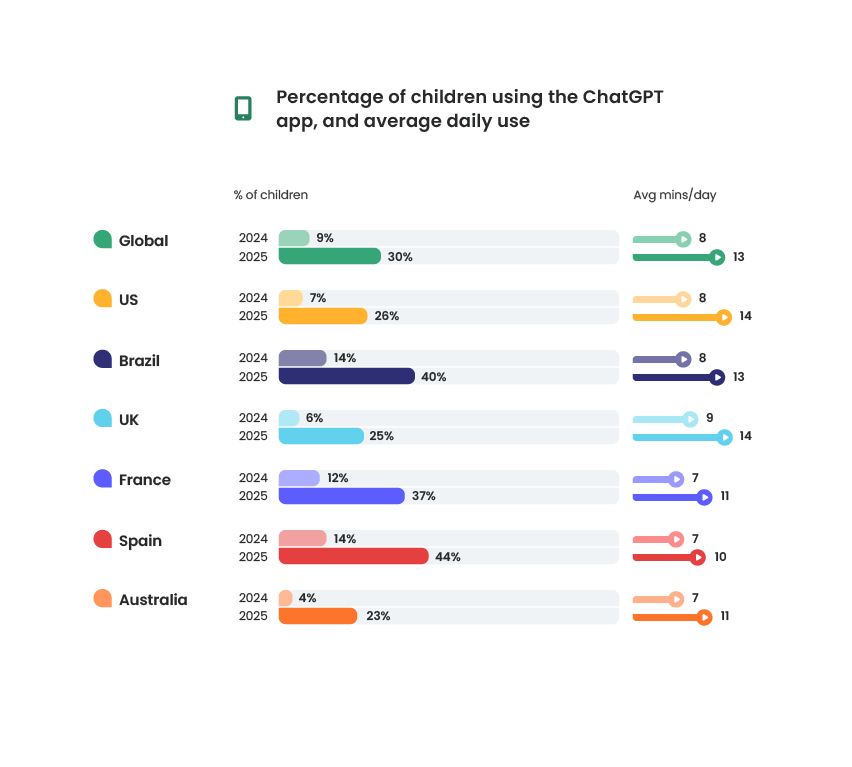
2025 was the year that solidified use of AI tools such as ChatGPT, bringing them into the mainstream even for children. Over the year, almost 1 in 3 children globally used the ChatGPT app, from just 9% in 2024. Even more children accessed AI through the web, with chatgpt.com becoming one of the most-accessed websites for kids around the world across 2025. Despite its global reach, children in the UK reached for the chatbot less, with 1 in 4 British children (25%) accessing the ChatGPT app throughout the year – an increase from just 6% of kids in 2024. UK kids spent just under a quarter of an hour (14 mins) a day consulting, chatting to, and requesting information from the app over 2025.
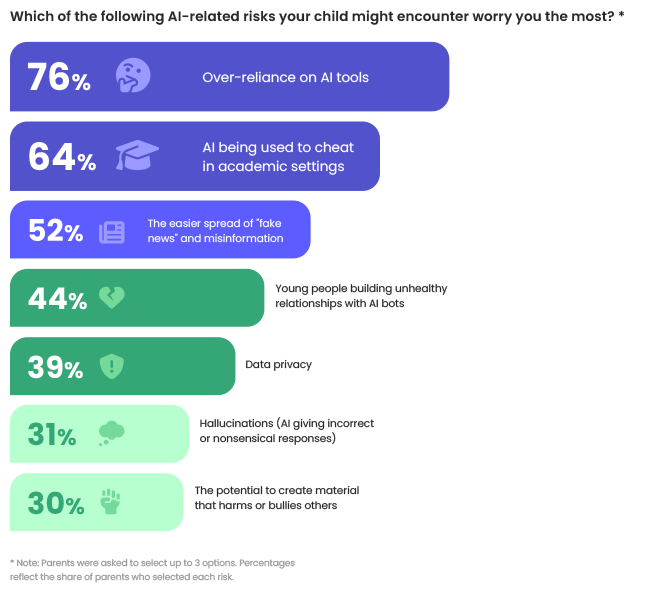
According to parents, children are most commonly using AI for homework and school-related activities, but just under half (48%) assert that their children are turning to AI tools for advice, while just under 1 in 5 kids (17%) are turning to AI to talk or converse with. Parents expressed deep concern about over-reliance on AI, misinformation, academic cheating, and the risk of children forming unhealthy relationships with conversational bots.
While tailored, app-based AI companions and chatbots still remain relatively niche in popularity – 1 in 50 children used AI-companion app Character AI over 2025 – the pull of these apps can be strong, with the small number of UK children spending time on these chatbots such as Character AI engaging with them for over an hour daily.
“Every child and family is different, but it’s important for parents and guardians to pay attention to potential red flags surrounding how children use chatbots and AI,” advised Pavkovic. “There are some signs and behaviors to watch for that could indicate an over-reliance or unhealthy relationship with AI technology, including if the time kids spend interacting with these tools is increasing, or they’re prioritizing use over time with friends and family. Other red flags can include a child being more secretive about how they’re using AI, relying on bots for emotional support, or if they start talking about bots they engage with as if they’re real people.”
Social gaming dominates kids’ screen time, raising concerns about in-game chat
Kids in the UK averaged more time on mobile and desktop gaming than their European counterparts in Spain and France, and especially on games with social elements such as Roblox and Fortnite. Young Roblox players in the UK spent an average of 1 hour and 16 minutes per day on the mobile app and 2 hours and 17 minutes on the desktop equivalent.
Kids’ gaming choices varied by device: on mobile (with the exception of Roblox) they gravitated toward fast, easy-to-play titles like Brawl Stars, Block Blast, and Magic Tiles, while on desktop they dedicated almost twice the screen time playing social-based, community-driven games such as Minecraft, Fortnite, Rocket League, and of course, Roblox.
With young gamers spending an average of 1 hour, 41 minutes per day on the desktop versions of these platforms, parents might be concerned about who they might be connected with in these social-based games.
“For kids, gaming is as much about hanging out with their friends as it is about gameplay,” advised Pavkovic. “In-game chat is key to the social nature of games like Roblox, Minecraft, and Fortnite. While chatting to fellow players can be fun, it can lead kids to seeing or hearing bad language, being bullied, and even being contacted by strangers. There have been reports of adults using Roblox and other gaming apps to engage with children for nefarious means, such as recruiting, harassment or grooming. And though interactions like this are still limited, they do occur, and parents need to be mindful their kids may be exposed to these risks.”
A call for guidance
The report concludes that while debates around phone bans, social media age limits, and AI restrictions continue to dominate headlines, families need more than one-size-fits-all rules. Parents are asking for guidance that reflects how children actually use technology, and solutions that evolve as quickly as problematic platforms do themselves.
“Parents are not trying to stop technology,” said Viktorija Miliajeva, Qustodio CEO. “They are trying to raise children in a world where technology is no longer passive. Apps talk back, algorithms shape identity, and AI is becoming part of everyday decision-making. This report reflects the reality of many families across the UK right now – children’s digital lives are evolving faster than the rules and guidance around them. Fear-based reactions and one-size-fits-all solutions may dominate the conversation, but they don’t reflect how families actually live. At Qustodio, we believe progress comes from pairing data with practical guidance, and knowledge with presence, so parents can protect their children while still allowing them to learn, connect, and grow.”
Lost in the scroll aims to give families, educators, and policymakers insight and grounding, combining children’s real-world use with parents’ lived experiences to help better understand what childhood looks like in an age driven by algorithms, tailored content, and fast-moving AI developments.
For the full report, including parent reflections, detailed breakdowns of app use by category, and practical advice for parents from digital wellbeing professionals, access the button below.
For media enquiries or questions about this report, please contact press@qustodio.com
About Qustodio
Qustodio is the world leader in online safety and digital wellbeing for families. Since 2012, the company has delivered a cross-platform solution for families and schools, helping over 9 million families protect children from online harm, while promoting healthy digital habits and awareness. Available in over 180 countries in 8 languages, Qustodio’s digital wellbeing tools help families live and navigate smarter in an increasingly connected world. In 2022, Qustodio became part of the Qoria group, protecting every child’s digital journey through a world-class collaboration between schools, parents, and educators in cyber safety. Visit www.qustodio.com for more information.