


Your 14-year-old posts a photo from their school hallway and tags their location. You share a video of your youngest’s first soccer game, complete with their full name in the caption and the school logo clearly visible on their jersey. Neither of you thought twice about it. This is exactly how oversharing happens – not through bad intentions, but because nobody paused to consider the potential consequences.
In a world where sharing has become a reflexive habit for kids and adults alike, knowing what not to post is one of the most important digital literacy skills a family can develop.
What is oversharing and why does it matter?
Oversharing is any post, image, comment, or video that reveals more personal information than is safe or wise. The consequences can follow a child or family for years. Key risks include:
- Identity theft and fraud – Names, birthdates, school names, locations, and daily routines (pieced together from multiple posts) give bad actors enough to steal an identity or target a child.
- A permanent digital footprint – What gets posted online rarely disappears completely, even when deleted. Screenshots can make the rounds. University admissions offices and future employers increasingly search candidates’ digital histories.
- Cyberbullying and harassment – Personal photos and information shared without thought can be taken out of context or used maliciously.
- Predator access – Real-time location tags, visible school identifiers, and accessible profile details make children more findable to people who intend harm.
Why teens and preteens are at greater risk
One of the most important points I make with parents is that the risks of oversharing are greater for teens and preteens, and this is because of brain development. Research on decision-making in the adolescent brain shows that the parts of the brain responsible for impulse control, judgment, and thinking through long-term consequences develop slowly through adolescence and aren’t fully mature until the mid-twenties. The brain’s reward system, however, is highly active during these years. Social feedback in the form of likes, comments, and shares activates it powerfully.
This means that a 12-year-old is typically less equipped neurologically than a 16-year-old to stop and ask, “What might happen if I post this?” before hitting share. A younger teen is much more likely to be driven by the immediate social reward of posting than by any consideration of how a photo might look to a future employer, or how much personal information it reveals to a stranger.
This is one of several reasons I recommend that children not have their own personal social media accounts until age 16, and certainly not before 13 (the legal minimum). The question of social media readiness has less to do with rules than with cognitive maturity, and that maturity develops gradually.
Teaching your teen to pause before they post
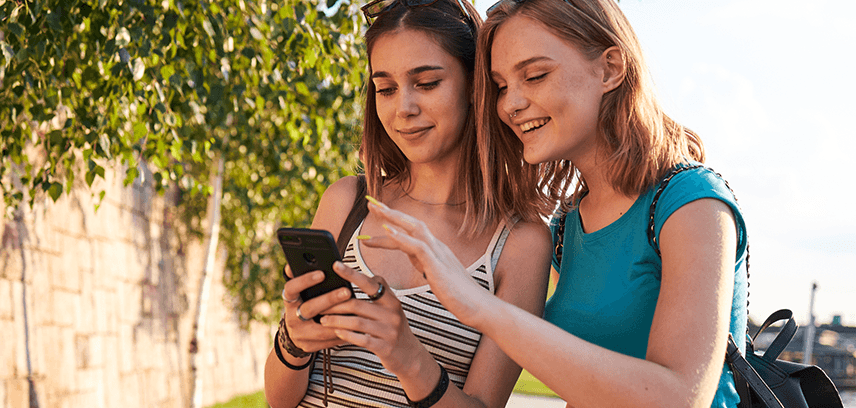
Even for teens who are already on social media, the habit of pausing before posting doesn’t come naturally. It must be actively taught. Research on adolescent oversharing has found that anxiety, attention-seeking, and social media addiction are all associated with higher rates of oversharing in teenagers. This means that the kids who are most emotionally vulnerable are often the ones sharing the most – and the most unwisely.
Here are the key habits to build through ongoing conversations with your preteen or teen:
- Use the “three audiences” pause – Before posting anything, ask: “Would I be comfortable if my teacher saw this?” “A future employer?” “A stranger who doesn’t know me?” If the answer to any of those is no, then don’t post it.
- Know what you’re revealing (even indirectly) – A photo can expose your school via a uniform or logo, your neighborhood via street signs or landmarks, or your home via visible address numbers. Help your child learn to look at a photo before posting and ask: “What does this actually tell someone about me?”
- Never share location in real time – Posting “at the mall with friends” while you’re still there tells anyone watching exactly where you are. Save location-tagged posts for after you’ve left, or skip them entirely.
- Understand that nothing is truly private or temporary – Even “close friends” lists can include people who screenshot, and even Snapchat messages get saved. Assume anything posted could become public.
- Protect others, not just yourself – Get permission before posting photos that include friends. Never share someone else’s personal information, relationship drama, or embarrassing moments without their consent.
- Wait before posting anything emotionally charged – Teens are most likely to overshare when they’re upset, excited, or seeking validation. A simple “wait 24 hours” rule for anything emotionally driven can prevent regret.
Parents: this conversation goes both ways
It’s easy to focus entirely on what our kids are posting and overlook our own habits. But the reality is that many parents are actively oversharing information about their children. This often starts long before those children can have any say in the matter.
“Sharenting” is the practice of regularly posting images, videos, and information about your children online, and it carries real risks. A child’s digital footprint often begins in infancy and is built entirely by parents before the child has any awareness of what’s being shared about them. With advances in AI and facial recognition technology, photos posted years ago are now more traceable and identifiable than ever. This is true even for images you believed were relatively private at the time.
Here are a few practices worth considering:
Ask for your child’s permission before posting about them
Nothing about tweens and teens should be posted without a conversation and their consent. Many children report feeling embarrassed and betrayed when they go online for the first time as teenagers and discover years of their lives already documented and publicly shared.
Never share location details, school identifiers, or full names
Each of these seems harmless on its own, but combined across posts, they create a detailed picture of your child’s daily life that you never intended to make public.
Consider the long-term footprint you’re building
Before you post that cute bath photo, the meltdown video, or the post about a health struggle or behavioral issue, think carefully about how your child might feel about that content at 16 or 20. You need to determine whether it’s appropriate for you to make that decision for them.
Review your privacy settings regularly
“Friends only” settings offer more protection than public posts, but only if your friends list is genuinely people you know and trust.
Get support from parental control tools
Most families think of a parental control tool like Qustodio primarily as a way to limit screen time, but it also has value in the context of oversharing because of the visibility it provides.
Knowing which platforms your child is active on and how they’re using them gives you openings to teach important skills. If your teen joins a new platform or changes their app habits – like scrolling late into the night – treat it as an opportunity to talk. Sit down together to review their recent posts and discuss what a stranger might learn from their profile.. Those conversations are far more effective than any rule, and they only happen when you know enough to start them.
The same tools work in the other direction, too. If you recognize your own reflexive habit of documenting and posting every family moment, using Qustodio to apply the same limits to yourself is a valuable place to begin.
Model the behavior you want to see
The most powerful digital literacy lesson you can give your child isn’t a rule; it’s watching you pause before you post. When kids see their parents thinking aloud (“I want to share this photo, but let me check whether it shows our street”), they internalize the lesson and the habit in a way that no lecture or rule can accomplish.
“Pause before you post” isn’t just something to teach your children. It’s a practice for the whole family.

