

You can be whoever you want online – yourself, an edited version of who you are, or someone else entirely. Through immersive social and gaming experiences, kids and teens now have ways to explore their sense of self in a digital environment before they even get to know who they really are offline.
Zepeto is exactly one of these experiences. It’s a social-driven, interactive and highly customizable platform which is hugely popular, especially among younger people. Zepeto allows users to create 3D avatars in the style they choose to explore virtual worlds, play games, and meet new people online. If that has alarm bells ringing – you’d be right to be cautious. Let’s take a look at how Zepeto works, what kids can do on the platform, and the risks parents need to be aware of.
What can kids and teens do on Zepeto?
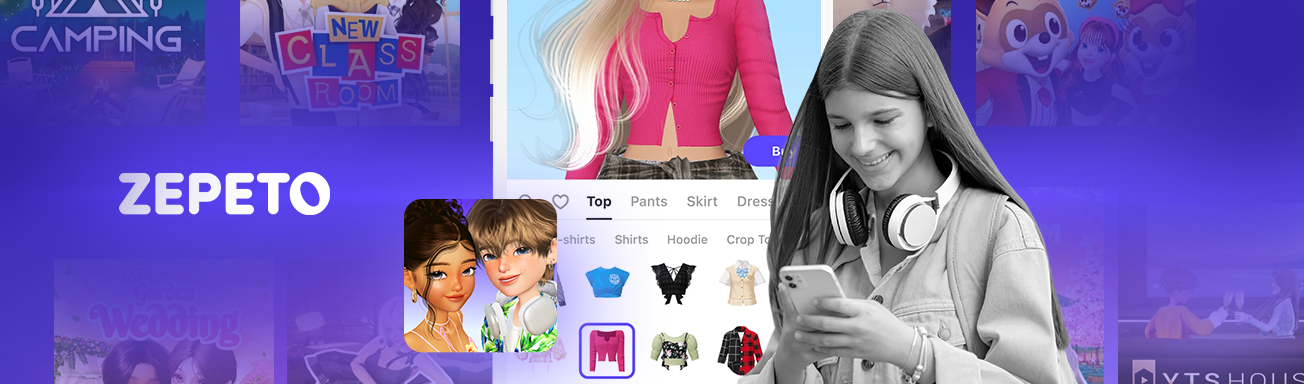
Zepeto is a global “metaverse” space that allows users to curate their own avatar, then explore and interact with it, through engaging animations, cute features, and individual games themed around everything from Squid Game to The Little Mermaid.
Developed by Naver Z in South Korea, it was launched in 2018, and quickly became a hit across Asia – with popularity gradually catching up around the world. It draws on elements from social media, popular gaming platforms, and virtual reality. Zepeto lets kids:
- Create and customize their own avatar, changing appearance, outfits, and accessories. Users can create avatars from scratch, or upload a photo to base the avatar on their real-world appearance.
- Explore virtual worlds and spaces, where they can interact with other users, start chats, and play games. Some worlds are user-generated, while others are built by brands or entertainment companies – for example, Disney, Nike, and K-pop sensations BTS have all collaborated with Zepeto to create in-app experiences.
- Scroll a feed featuring content generated by other Zepeto users, just like TikTok, but using avatars. People can upload clips of their avatars dancing, taking part in trends, or performing.
- Comment on, like, or share videos from the feed.
- Live stream with their avatar, with other users watching and leaving comments in real time.
- Buy clothes and accessories using “Coins” and “ZEMs” (the app’s currency, which you can earn through in-app activity or purchase using real money).
- Private message other users, sending texts or images through one-on-one chat.
Children should be 13 and over to use the app, according to the terms of use, but that doesn’t stop younger people from using it – as there’s no way for users to verify their age, children can simply enter a fake date of birth to start playing and posting.
Zepeto: the risks parents need to know about
Stranger interaction
Children can interact through open text chat and voice chat inside virtual worlds. Zepeto has public chat rooms, live feeds, and comment sections, where anyone can leave messages and connect – meaning there’s no way to tell who your child is interacting with.
Private messaging
By default, users can DM each other and set up private, one-on-one conversations, or group chats. You can change this setting to restrict who can message your child, but as this is configured at the account level, your child could go back into the settings and adjust.
A known issue with platforms like Zepeto, Roblox, and open-chat games, is the “platform shift”. This happens when other users try to convince young people to leave the app and chat on more “secure” platforms, such as WhatsApp, where their messages would not be flagged or monitored for inappropriate content, and remain more private.
Sharing personal information
While livestreams, videos, and images in the feed use your child’s avatar rather than real photos, they can send images in one-on-one chats. On your child’s profile in Zepeto, there’s also the option to display their general location, teamed with a short bio. If your child posts any identifiable information in their bio (such as age, school name, town, or city), it will be visible to anyone else using the app. Zepeto uses AI filters to block phone numbers and addresses from being shared, but there are ways to get around these filters, such as writing numbers as words, or breaking up addresses with spaces.
User-generated content and live streaming
Most of the content that kids can access on Zepeto is generated by other users, and while there is moderation, content can easily slip through the cracks – especially as the app offers live streaming features. Children can easily come across inappropriate language in comments, bullying, or inappropriate themes in open chat rooms. Other users have reported seeing avatars dressed in “revealing” or suggestive clothing.
Users can also create virtual spaces that may be inappropriate in nature for younger teens, such as spaces for online dating, or themed worlds based on content not apt for their age group – for example, a Squid Game-themed experience might not be dangerous in itself, but it could prompt younger children to be curious about the source material, which is intended for more mature viewers.
In-app purchases
While you don’t need to spend money on Zepeto, and the app is free-to-play, children can “enhance” their experience through the virtual store, offering clothing, accessories, and other add-ons to customize their avatar. Some of these items can be limited edition or exclusive, so just like in the real world, teens want to be seen as on-trend. These items are purchased with ZEMs, Zepeto’s in-app currency, which is paid for with real money.
Streaks and rewards
Daily rewards for logging in, including coins to spend on in-game experiences, can encourage users to come back to the app more frequently, creating a “fear of missing out” sensation. These types of rewards can take teens’ attention away from other activities while encouraging them to spend more time on screens, taking away from real-world opportunities.

5 ways to make Zepeto safer for teens
Zepeto offers some opportunities for creativity, and the immersive environment makes it engaging and interesting for teens. However, due to the nature of the platform, the fact there are no inbuilt parental controls, and the high potential for stranger contact, we’d recommend pushing the “13+” label Zepeto has established for teens (which is more to do with data privacy than real risk) to 16.
If your child is already using Zepeto, or they’ve heard friends talking about using it and are curious, open up the conversation with them and make sure they’re aware of the risks. Establish some ground rules and work together with your teen to encourage safe, responsible use – not just of Zepeto, but of online platforms and social media in general:
1. Understand the app.
Get to know the features, how your child or other children are using it, and explore what settings there are to help shield privacy and report other users or behavior which goes against the platform’s guidelines. You don’t have to do this homework by yourself! Asking your child to show you around or installing new apps together can be a way to work through the features and settings in real-time, allowing you to react in the moment.
2. Control privacy settings.
Adjust your teen’s privacy options to restrict who can contact them, and block access to DMs to ensure strangers cannot contact your child one-on-one. Make sure your child hasn’t written their real age, handles for any other platforms, or any personal information in their public bio.
3. Limit screen time.
Social or streak-based apps can be difficult for children to switch off from. Set boundaries and limits on the time your child can use apps like Zepeto, and clearly set out spaces or times in the day where your child cannot have access to their devices – such as behind closed doors or before bedtime. A family digital agreement is a great way to establish these ground rules about family tech use. Qustodio can help set daily screen time limits, and establish rules for individual platforms like Zepeto, by setting time limits for using the app or by blocking it entirely.
4. Keep tabs on in-app purchases.
On platforms like Zepeto, children need to be made aware that in-app purchases exist, and that the platform is designed to make them want to spend in-game currency or real-life money on digital purchases. Set up rules and boundaries for online spending, and avoid linking your child’s account with any card details. If your teen is older and has their own money to spend, discuss money management and ask them questions about what they’re spending or saving for.
5. Foster open communication.
Talk to your teen about online safety, the importance of privacy, and the risks of sharing personal information. Make sure that they know they can come to you or other trusted adults if they feel uncomfortable when using Zepeto, or any other application.
Apps like Zepeto, which blend gaming, social, and creative elements, are hugely appealing to teens and younger children. However, parents must weigh this against the multiple risks children can come across on Zepeto: stranger contact, inappropriate content, group chat environments, tempting in-app purchases and fear of missing out. If your child uses or has expressed a wish to use apps like Zepeto, be sure to establish ground rules, engage in ongoing conversations, and stay informed about their online interests to help keep their experience safe, positive, and age-appropriate.

